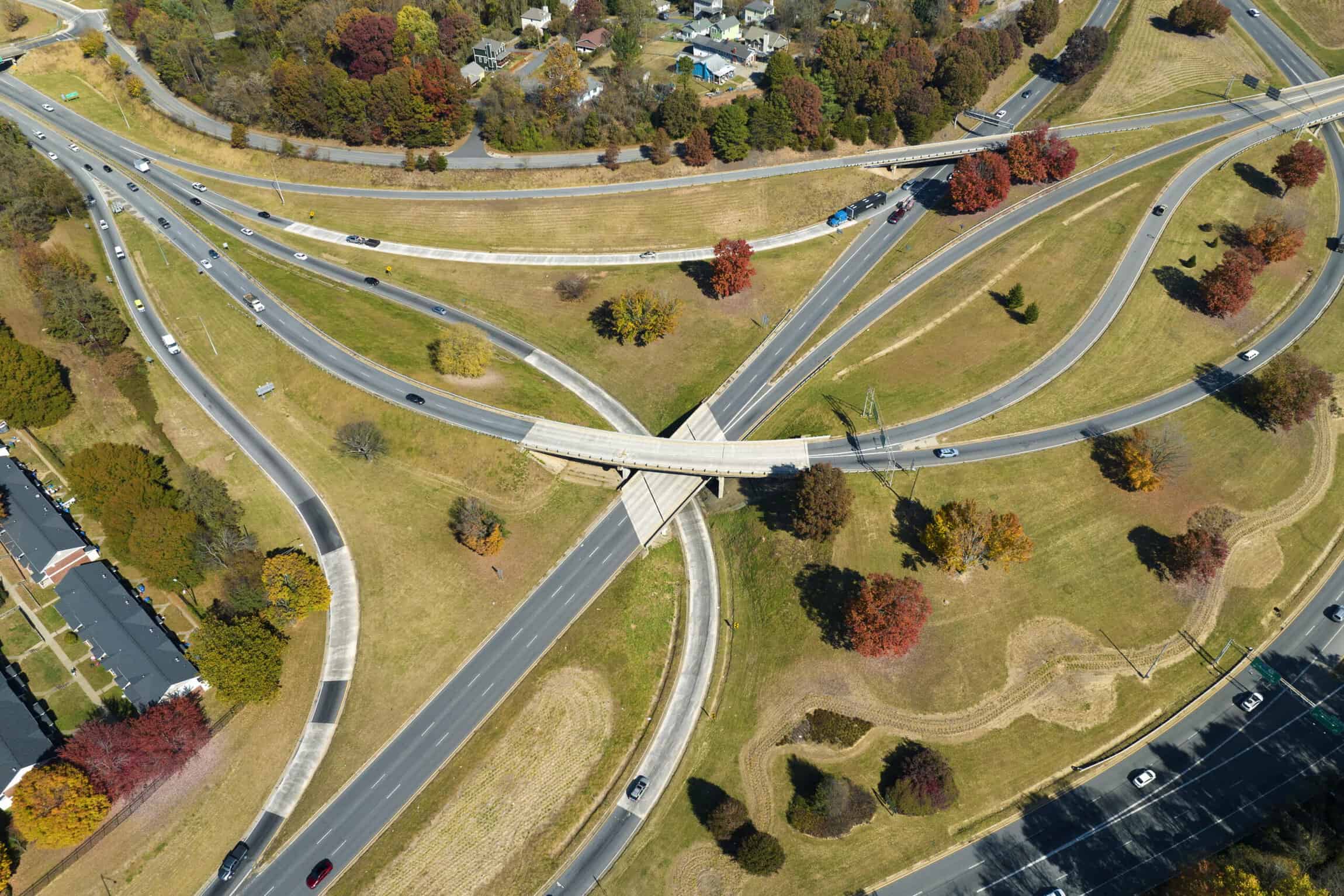
If you drive in Richmond, you already know some intersections just feel riskier than others, the ones where you grip the wheel a little tighter or double-check your mirrors before committing to a turn. That instinct isn’t wrong. Nationally, intersections account for roughly one-quarter of traffic fatalities and about half of all traffic injuries, according to the Federal Highway Administration, and Richmond’s mix of heavy commuter corridors, commercial strip development, and aging signal infrastructure puts several local intersections squarely in that high-risk category.
This guide breaks down which Richmond corridors see the most trouble, why they’re dangerous, what Virginia law means if you’re hurt at one of them, and what to do next.
Why Richmond’s Intersections Carry Outsized Risk
Intersections are where every kind of conflict happens at once: left turns crossing oncoming traffic, drivers merging from multiple directions, pedestrians stepping off curbs, and vehicles trying to beat a changing signal. Richmond’s layout compounds this in a few specific ways:
- Mixed commercial and residential corridors. Roads like Broad Street and Hull Street carry retail traffic, commuters, and local residents on the same stretch of pavement, which means frequent stops, turns into parking lots, and speed mismatches.
- Interstate interchange congestion. Where I-95, I-64, and the Downtown Expressway converge near central Richmond, high-speed through-traffic meets sudden merges and exits.
- University and hospital traffic. Areas near VCU and VCU Health mix vehicle traffic with heavy pedestrian volume, which raises the stakes when a crash does happen.
- Aging signal timing and turn-lane design. Many Richmond intersections were built before current traffic volumes existed, and some still lack dedicated turn lanes for the volume they now carry.
None of these factors sit in isolation; a commuter cutting through a retail corridor at rush hour could be navigating outdated signal timing and merging interstate traffic at the same time. That overlap is exactly why certain Richmond corridors show up again and again in crash data, and why knowing which ones to approach with extra caution is worth a few minutes of your attention.
Richmond Corridors Known for Higher Crash Risk
Rather than rely on a specific crash-count ranking (VDOT and Richmond Police Department data change year to year, and we’d rather point you to a verified source than a stale one), here’s a breakdown of the corridors and intersection types that consistently show up as trouble spots in local traffic safety discussions:
| Corridor / Area | Common Crash Type | What Drives the Risk |
| Broad Street corridor (including near Glenside Dr. and Staples Mill Rd.) | Rear-end collisions | Heavy retail traffic, frequent sudden stops, mixed pedestrian activity |
| Hull Street Road / Midlothian Turnpike corridor | Turning and side-impact crashes | High driveway density, inconsistent turn-lane availability |
| I-95 / I-64 / Downtown Expressway interchange area | High-speed rear-end and merge crashes | Speed differential between highway and surface traffic, short merge distances |
| Broad Street & N. 12th St. (VCU Health area) | Pedestrian-involved crashes | Heavy foot traffic combined with vehicle turning movements |
| Chamberlayne Avenue corridor | T-bone (side-impact) crashes | Signal timing and visibility issues at cross streets |
If you want the most current, address-level crash data for a specific Richmond intersection, VDOT’s public crash data portal is the authoritative source, and the city’s Vision Zero initiative tracks ongoing safety improvements at high-crash locations.
What Virginia Law Means If You’re Hit at an Intersection
Intersection accidents are uniquely prone to fault disputes, both drivers often believe they had the right of way, and there’s rarely a neutral witness who saw the whole sequence. That matters more in Virginia than in most states.
Virginia follows a contributory negligence rule. Unlike states that reduce your compensation based on your percentage of fault, Virginia law can bar you from recovering anything at all if you contributed in any way to causing the crash. This makes early evidence gathering, signal timing, witness statements, and dashcam footage especially important in intersection cases, since the other driver’s insurer will look for any basis to shift blame onto you.
You also have a limited window to file. Under Va. Code § 8.01-243, personal injury claims generally must be filed within two years of the crash, while property damage claims have a five-year window.
| Claim Type | Deadline Under Virginia Law |
| Personal injury | 2 years from the date of the crash (Va. Code § 8.01-243(A)) |
| Property damage | 5 years from the date of the crash (Va. Code § 8.01-243(B)) |
| Fault standard | Contributory negligence, any degree of fault may bar recovery |
Who May Be Liable Beyond the Other Driver
Most intersection accident claims center on driver negligence, but not always. If a crash pattern at a specific intersection points to a signal malfunction, missing turn lane, poor signage, or a design flaw the city or VDOT was aware of, a separate liability claim against the responsible government entity may be possible. These claims involve different evidence requirements and much shorter notice deadlines than a standard driver-negligence claim, so it’s worth having them evaluated separately rather than assumed away.
This is also where the type of vehicle involved matters. A commercial truck merging through the I-95/I-64 interchange creates different liability questions, and often far more serious injuries, than a passenger vehicle collision. If a truck accident was involved, multiple parties beyond the driver, including the trucking company, may share responsibility.
What to Do If You’re in an Intersection Accident in Richmond
The steps you take in the minutes and days after a crash can shape whether you’re able to recover full compensation later, especially given how quickly evidence at an intersection can disappear or get disputed.
- Call 911. Report the crash and request medical attention, even if injuries seem minor at first.
- Document the scene. Photograph vehicle positions, traffic signals, skid marks, and any visible signage or sightline obstructions.
- Get witness information. Independent witnesses are especially valuable in intersection cases, where fault is often disputed.
- Seek medical evaluation promptly. Some injuries, including concussions and soft-tissue damage, don’t show symptoms immediately.
- Avoid recorded statements to insurers before speaking with an attorney; early statements are often used to argue you shared fault. You have a duty to cooperate with your insurance company’s investigation of the accident. Failure to cooperate with your insurance company may result in a denial of coverage.
- Keep records of everything: medical bills, missed work, and repair estimates, from the start.
Some intersection crashes result in catastrophic injuries, including traumatic brain or spinal cord injuries, given the speed and impact angles common at these locations. In the most serious cases, families may also be facing a wrongful death claim rather than a personal injury case. Both require the same urgency around evidence preservation described above.
Why Choose Renfro & Renfro
Renfro & Renfro has spent years handling car accident claims across Richmond’s highest-risk corridors, from the Broad Street commercial strip to the I-95/I-64 interchange. We know how quickly evidence disappears in intersection cases and how aggressively Virginia’s contributory negligence rule gets used against injured drivers, and we build claims to withstand that scrutiny from day one.
If you were hurt in an intersection accident in Richmond, we’re ready to review what happened and walk you through your options clearly and at no cost to get started.
Schedule a Free Consultation with Renfro & Renfro today.
Frequently Asked Questions
What makes an intersection dangerous in Richmond? High traffic volume, mixed commercial and residential access points, aging signal timing, and heavy left-turn conflicts are the most common factors, particularly along corridors like Broad Street and Hull Street.
Who is at fault in a Richmond intersection accident? Fault depends on signal compliance, right-of-way, and turning movements at the time of the crash, and because Virginia follows a contributory negligence rule, even shared fault can affect your ability to recover compensation.
How long do I have to file a claim after an intersection accident in Virginia? Generally two years from the date of the crash for personal injury claims, and five years for property damage claims, under Va. Code § 8.01-243.
Can the city or VDOT be held responsible for a dangerous intersection? In some cases, yes, if a signal malfunction, missing turn lane, or known design flaw contributed to the crash, though these claims involve different evidence and much shorter notice deadlines than a typical driver-negligence claim.
What should I do immediately after an intersection accident in Richmond? Call 911, seek medical evaluation even if you feel fine, and document the scene, including signal placement and vehicle positions, before speaking with any insurance adjuster.